
In the face of the threat of the loss of the Northwest Coast culture, some people took steps to preserve this endangered knowledge and found new ways, albeit in a foreign form, to pass it on to the next generation. Though a different form of intergenerational transmission, knowledge was preserved. In the 1950s, for example, Walter Wright, a chief at Kitselas, the last of his people trained to memorize the oral history of his lineage in the old way, asked his friend, Gordon Robinson, to transcribe it for future generations. It was published in part in the 1950s, and then in 2003, in its complete form, by the Kitselas band and the Robinson family. Men of M’deek and Wars of M’deek is now distributed among the First Nations of the Northwest Coast and the general public.
The line of transmission that began with Kwakwaka’wakw artist, Mungo Martin, is another example. He was born in 1884 and grew up learning the ceremonies, songs, arts, and traditions of the Kwakwaka’wakw and other Northwest Coast cultures. His adult life was spent sharing this cultural knowledge through carving, painting and song making. Mungo Martin and Bill Holm, an art historian, worked together to preserve his cultural knowledge, by recording hundreds of his songs and the creation of canoes, masks and big houses.
In the process Bill Holm became interested in Northwest Coast painting, primarily on cedar. He travelled to many museums where he studied what came to be called ‘formlines’, the classic shapes and lines of Northwest Coast art, such as ovoids and u-shapes. His book Northwest Coast Indian Art, An Analysis of Form, became a key element in the revival of Northwest Coast art in the 1970s. Freda Diesing learned from Bill Holm’s research, and she passed on this knowledge of the art of the ancestors to many northern Northwest Coast artists, such as Dempsey Bob, Norman Tait and Don Yeomans.
Bill McLennan, a curator at the Museum of Anthropology at UBC continued the work of Bill Holm when he discovered that infrared photography could reveal ancient designs painted on bentwood boxes and housefront paintings. In a project that culminated in another key book, The Transforming Image, photographs of hundreds of treasures have revealed further the amazing creativity and cultural knowledge in the painted arts of Northwest Coast First Nations. Bill Mclennan spent most of his life working with First Nations artists and groups to make this information available in their communities.
Master Haisla artist, Lyle Wilson, worked with Bill McLennan on the Image Recovery Project at the Museum of Anthropology at UBC. He was inspired by the designs of the past, the paintings on cedar that Bill McLennan’s infrared photography revealed. He played a critical role in recreating them, and preserving them and he is now famous for his mastery of painting Northwest Coast designs on cedar. His works then included:
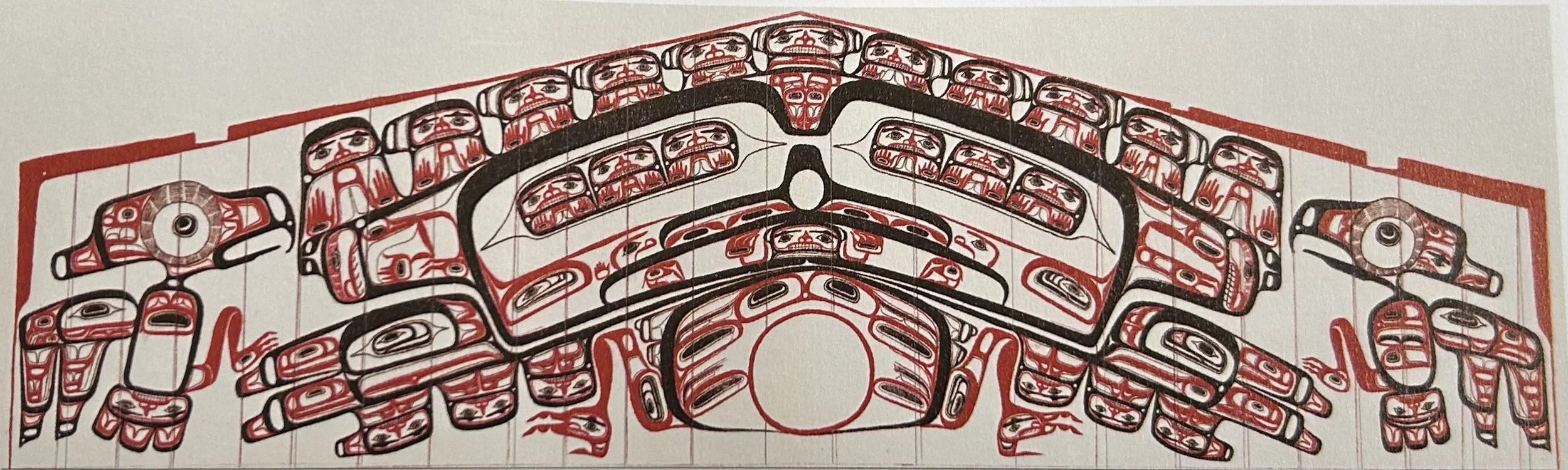
Rendition by Lyle Wilson of House Front Painting on the House of Sgagweet, Eagle Chief of Lax Kw’alaams
Tsimshian Cosmos, private initiative model by Lyle Wilson: imaginative rendition of House Front Painting based on 6 aged painted planks originally collected at Lax Kw’alaams and now in the collection of the UBC Museum of Anthroplogy
Lyle’s passion for painting on cedar is expressed in his description of the artist’s experience.
The paintbrush is an ancient tool, remarkable for its sensitivity. The liquidity of paint on supple bristle means that every movement is recorded – whether the painter wishes it to be or not. The intense focus and concentration of the painter is a must. The fineness of line, tight curves, and arcs usually have an artist holding his breath lest the paintbrush reveal the movements of his lungs and impair the path of the painted line. It is, however, human to breathe – the resultant squiggles, wiggles, and bumps the brush imparts to the composition are ultimately an asset. It is this compromise between the idea, the artist, and the medium that is incorporated into the painted line. The brushwork is a device to give the image life and, by extension, a very human quality.
After years of studying and recreating ancient art works, Lyle compiled Paint, the Painted Works of Lyle Wilson, an exhibit of his painted Northwest Coast images on cedar and paper. His goal was to bring to light this amazing art form, and this exhibit, in its many installations across BC, and in its beautiful catalogue, have certainly achieved that end. As he stated:
While historical Pacific Northwest Coast paintings on boxes, screens, and house fronts arouse much interest among experts and the public, modern works in this medium are largely ignored. Because I also work in wood and metal, I know that painting is as challenging as these other media. Yet the inventiveness and skill involved in painting in Northwest Coast styles is not widely recognized.
The Museum was honoured to host this exhibit in 2016.
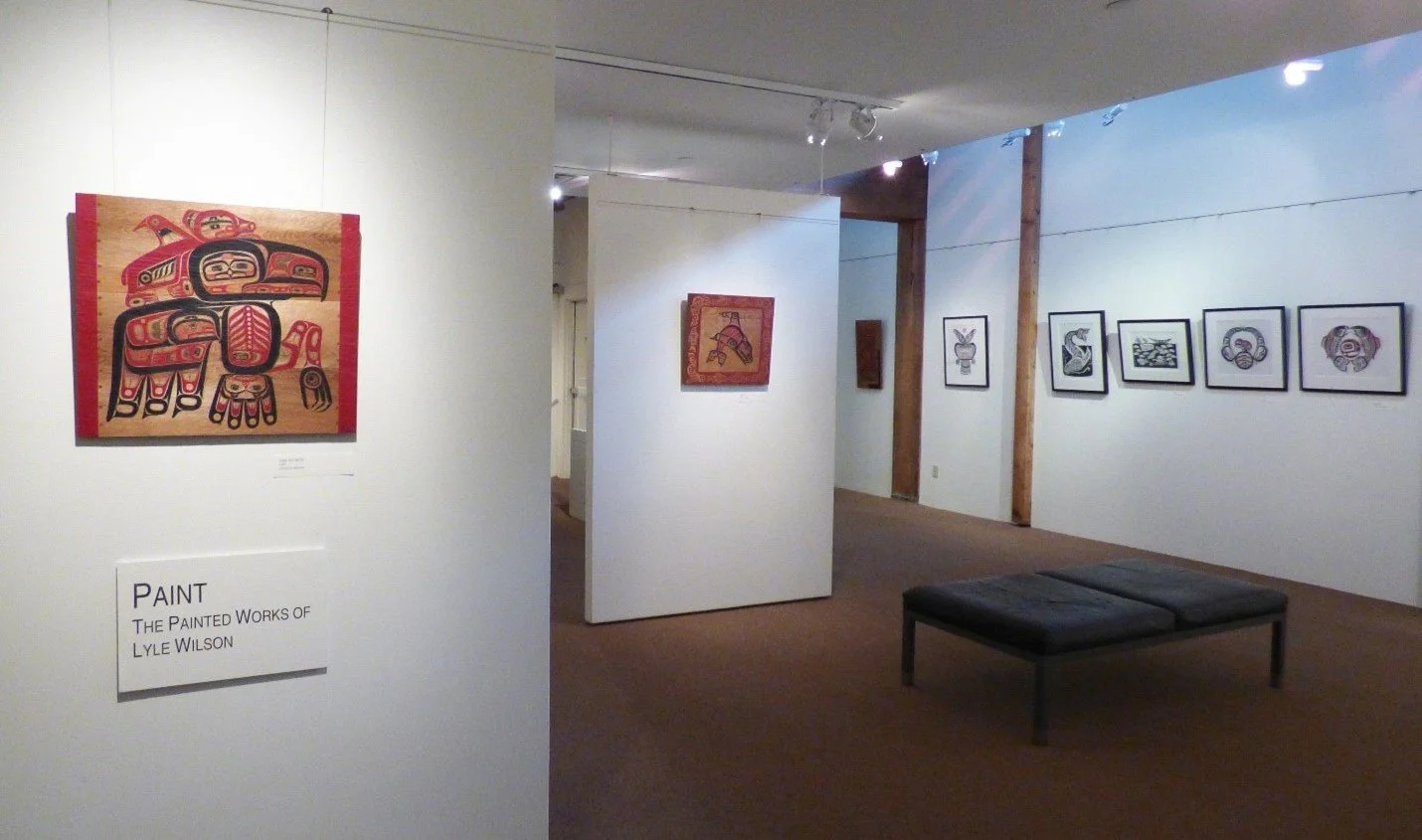
Paint, the Painted Works of Lyle Wilson at MNBC
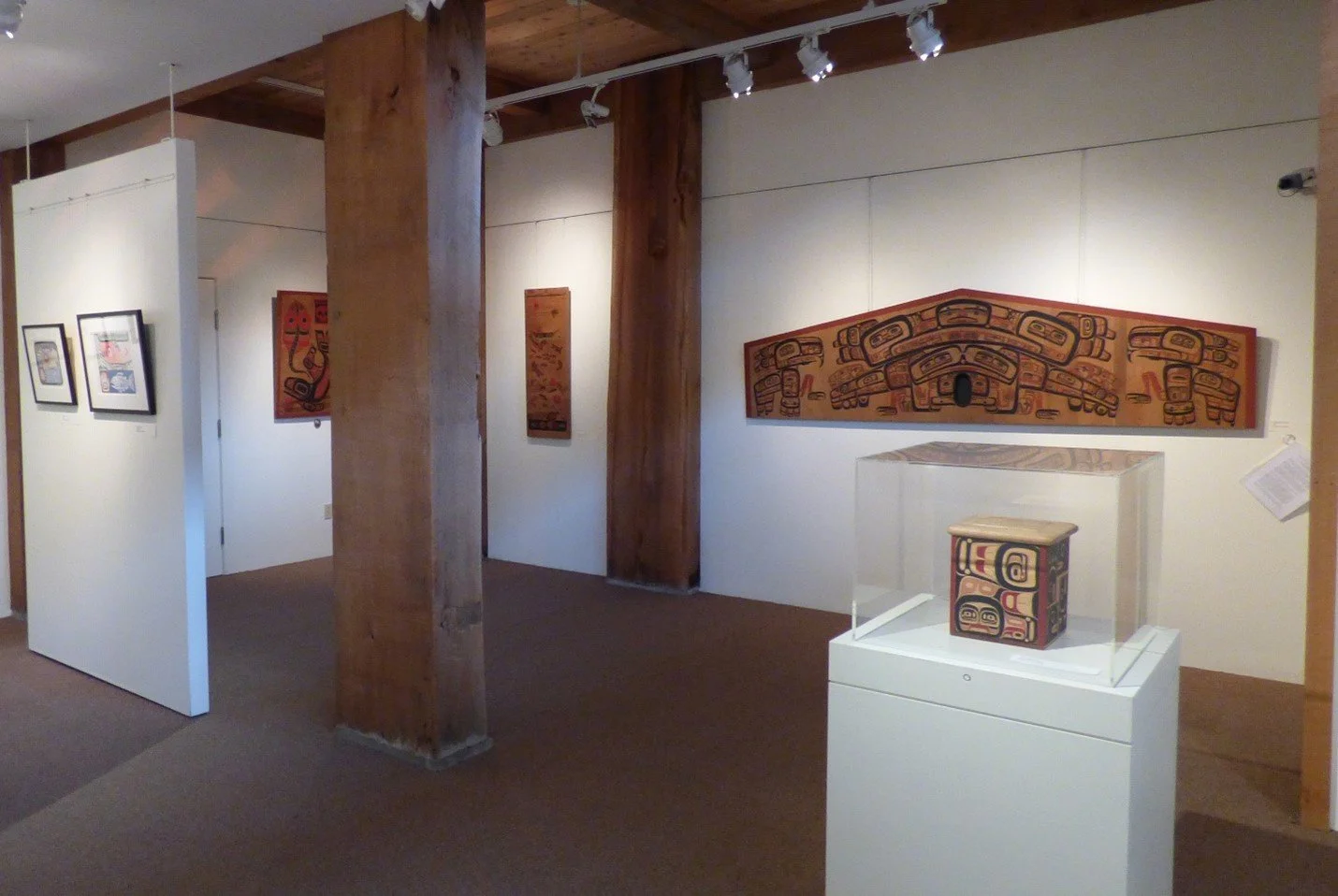
Paint, the Painted Works of Lyle Wilson at MNBC
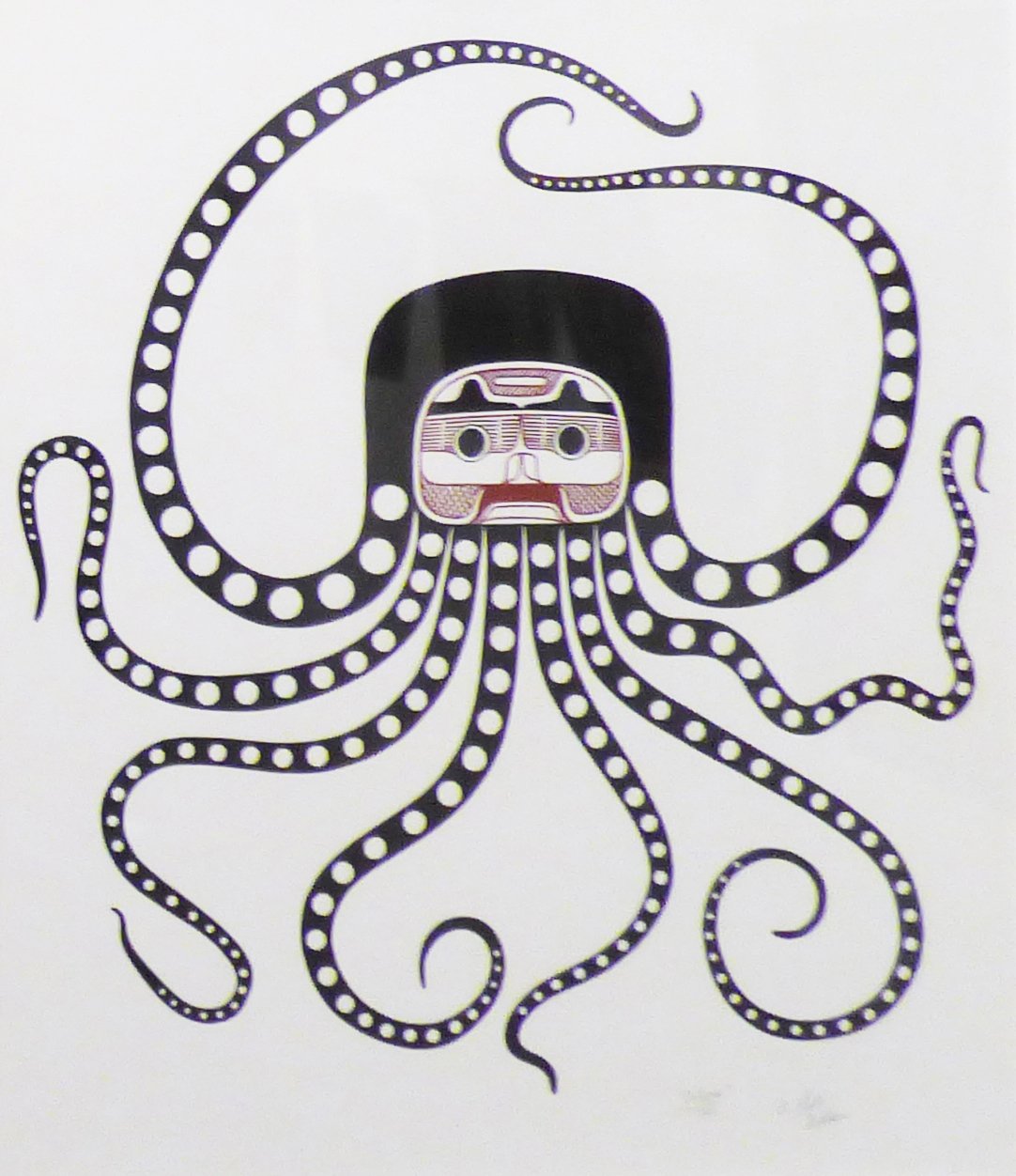
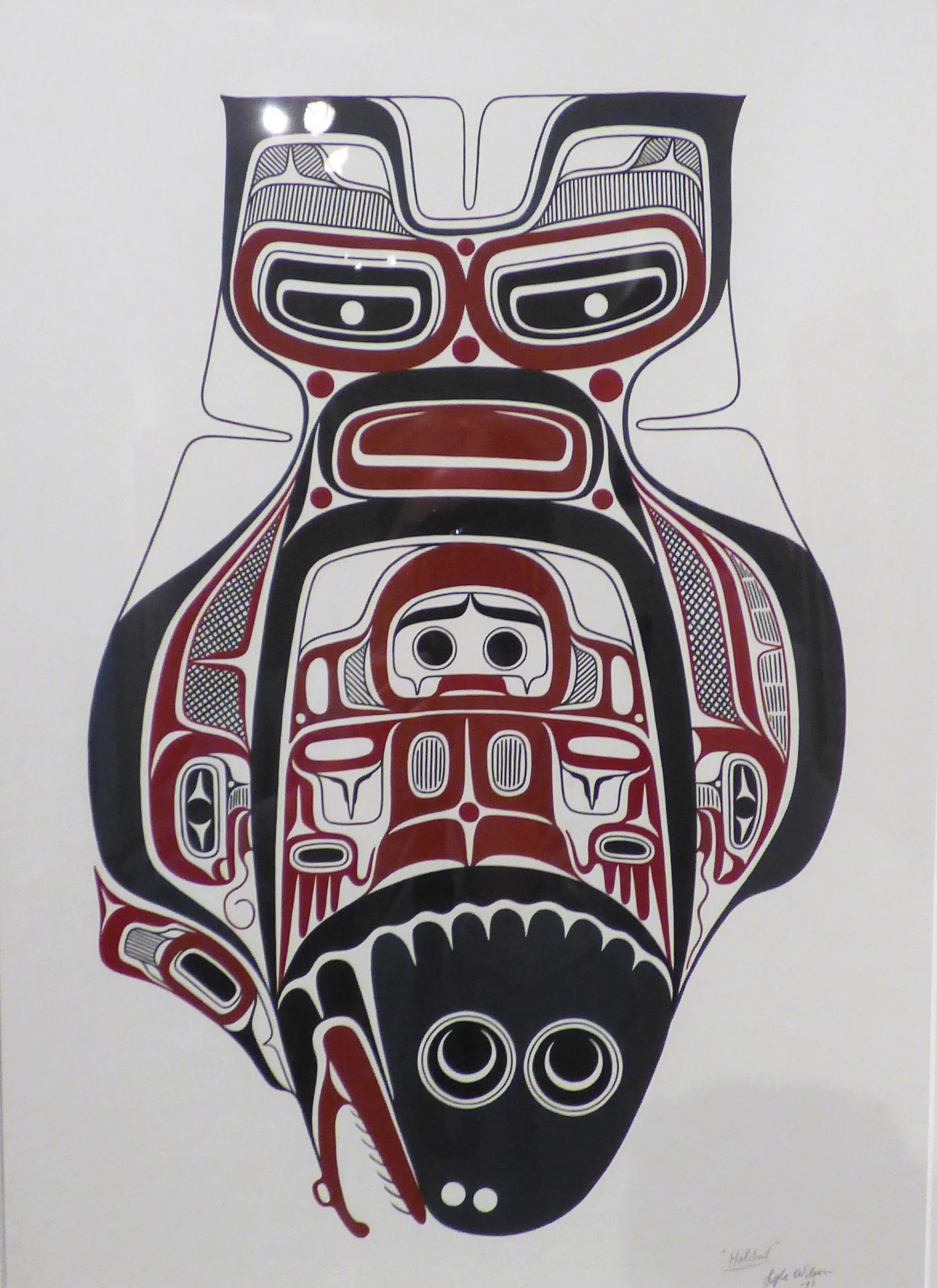
Octopus by Lyle Wilson
Halibut by Lyle Wilson
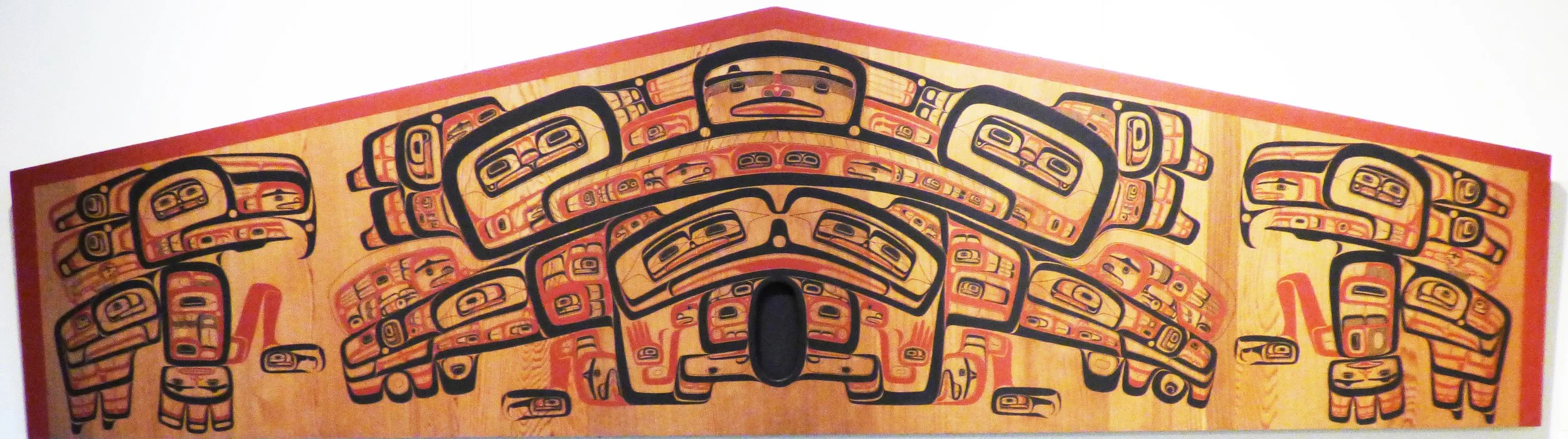
Featured in this exhibit was this painted replica of housefront boards collected in Lax Kw’alaams between 1800 and 1840.
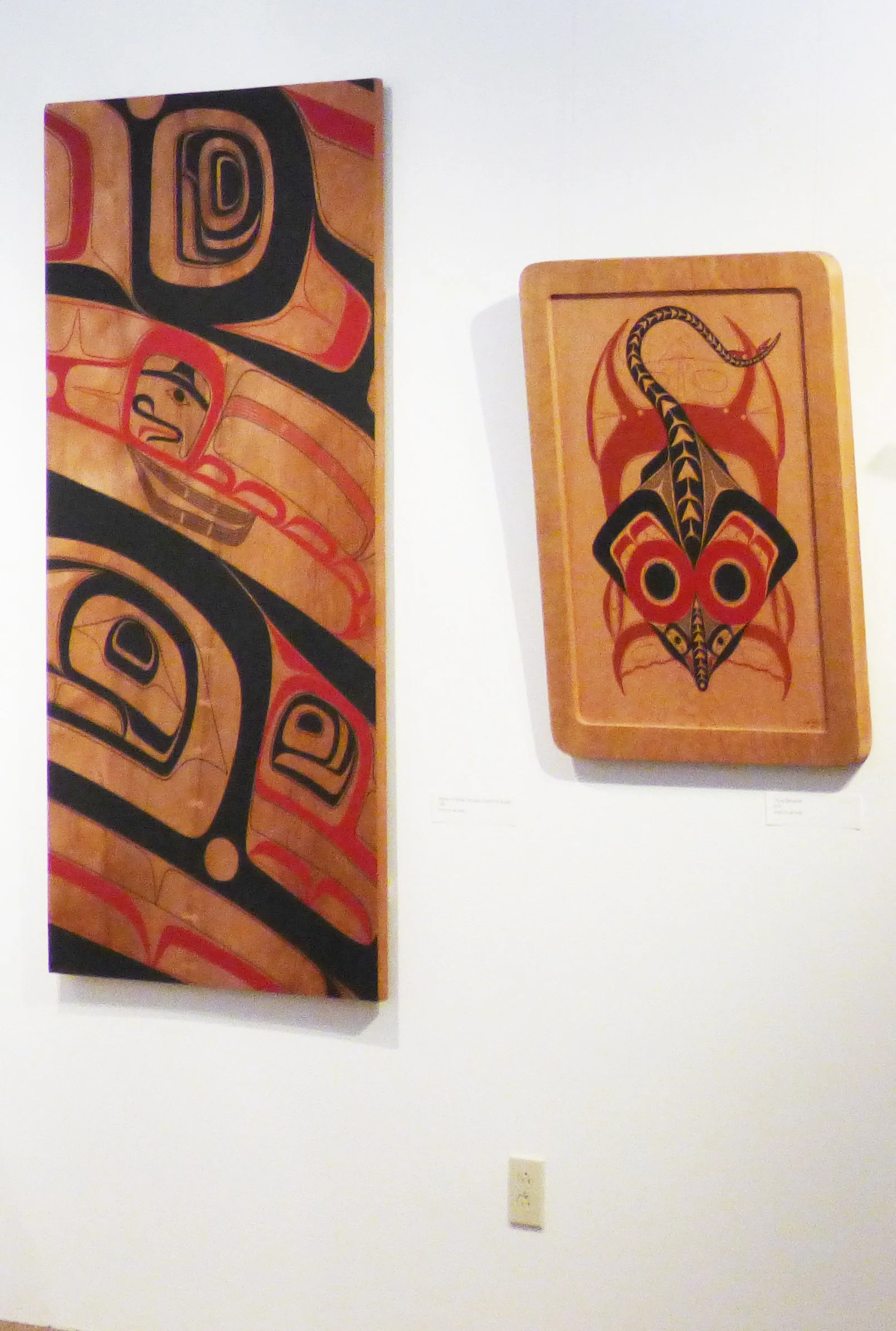
According to the Museum of Anthropology at UBC, where the original boards are preserved,
These planks are the oldest existing example of such house-front paintings. They constitute the only evidence of a painted façade that would have measured 5.5 metres (18 feet) high and 15 metres (50 feet) across. The boards were collected in Lax Kw’alaams, a village on the northern coast of BC. The boards were likely brought to Lax Kw’alaams from one of the older villages close to the mouth of the Skeena River.


Original Boards of Replica by Lyle Wilson of Ancient Housefront Boards at the Museum of Anthropology at UBC
After his exhibit, Paint, finished travelling, Lyle very generously donated this beautiful work to the Museum of Northern BC, where it was exhibited in the recent exhibit, One Hundred Years! The Museum of Northern BC and Its Times. He wanted the image to returned home, to inspire present-day and future generations of artists, and to remind the people of the power of their heritage. Like Mungo Martin before him, Lyle Wilson’s lifetime of work has been dedicated to that end, a remarkable endeavor and an inspirational gift to the people of the Northwest Coast, First Nations everywhere and the world.
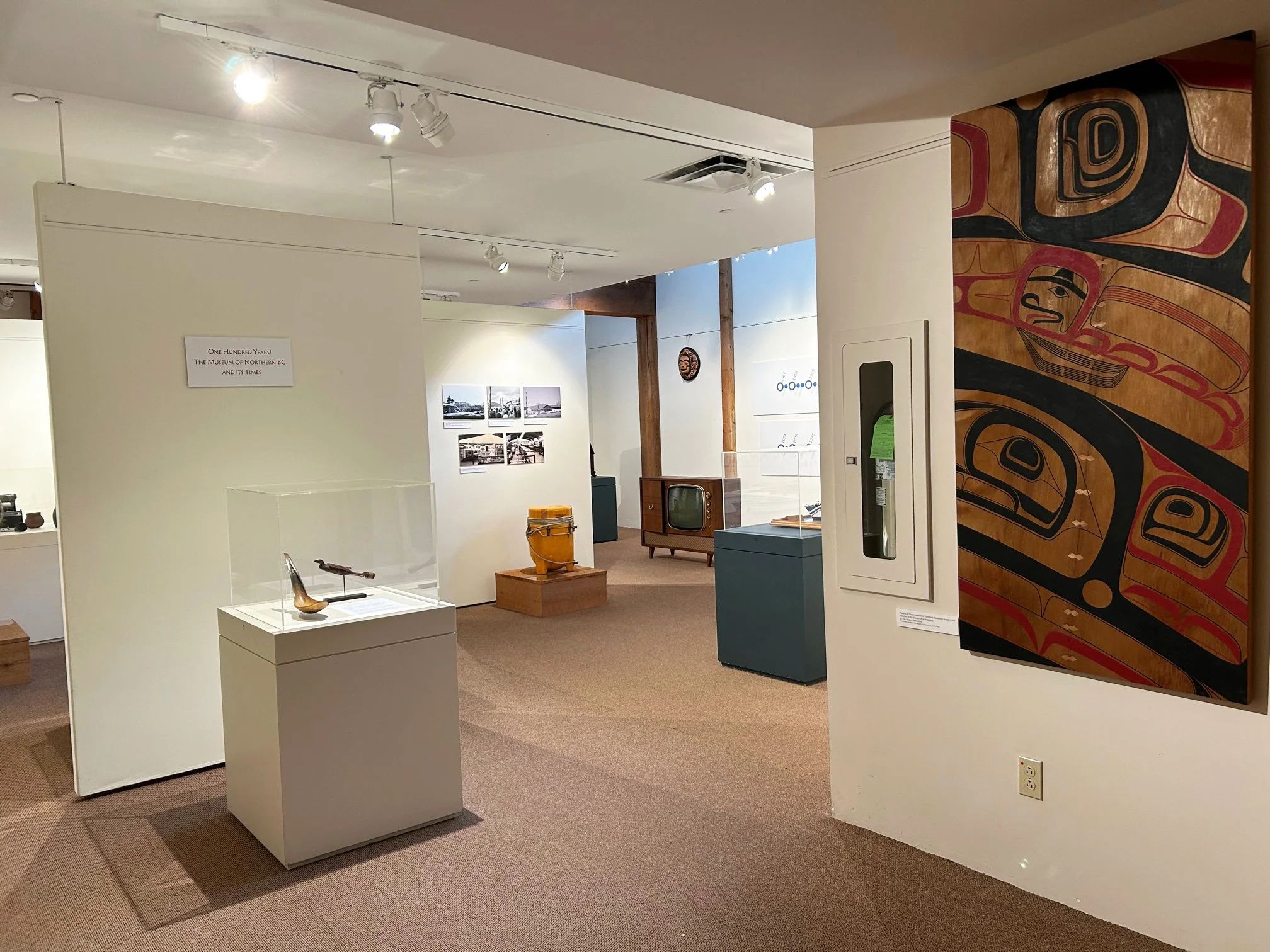
Replica of Ancient Housefront Boards by Lyle Wilson in Recent Exhibit,
One Hundred Years! The Museum of Northern BC and Its Times
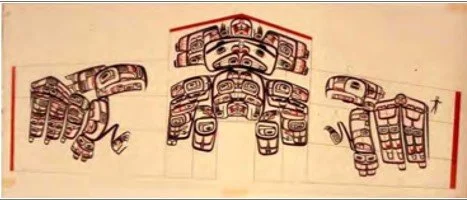
Drawing of Nuxalk House Front Design by Haisla Artist, Lyle Wilson, 1998
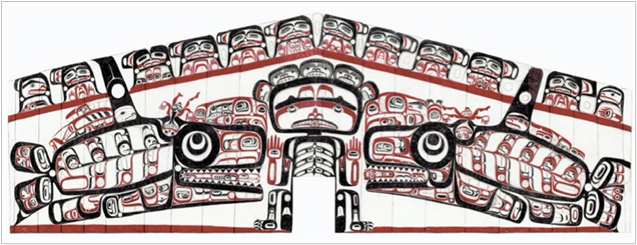
Rendition of Tsimshian painted house screen from Lax Kw’alaams based on DASI 410732, artist Lyle Wilson, Haisla, 1992